
Your technician mentioned Aprehend during the inspection, and you’d never heard of it. Now you’re trying to work out whether it’s better than the spray treatments you know, how it compares to heat, and which one makes sense for your property. You want a straight comparison, not a sales pitch.
The short version: Aprehend vs traditional bed bug treatments isn’t really an either-or choice. Each works differently and fits a different job. This post explains how Aprehend works, how chemical sprays and heat treatment each work, and which option fits single homes, multi-unit buildings, and properties with frequent tenant or guest turnover.
What Aprehend Is and How It Works
Aprehend is a natural fungal biopesticide. It can be used on its own or alongside heat treatment.
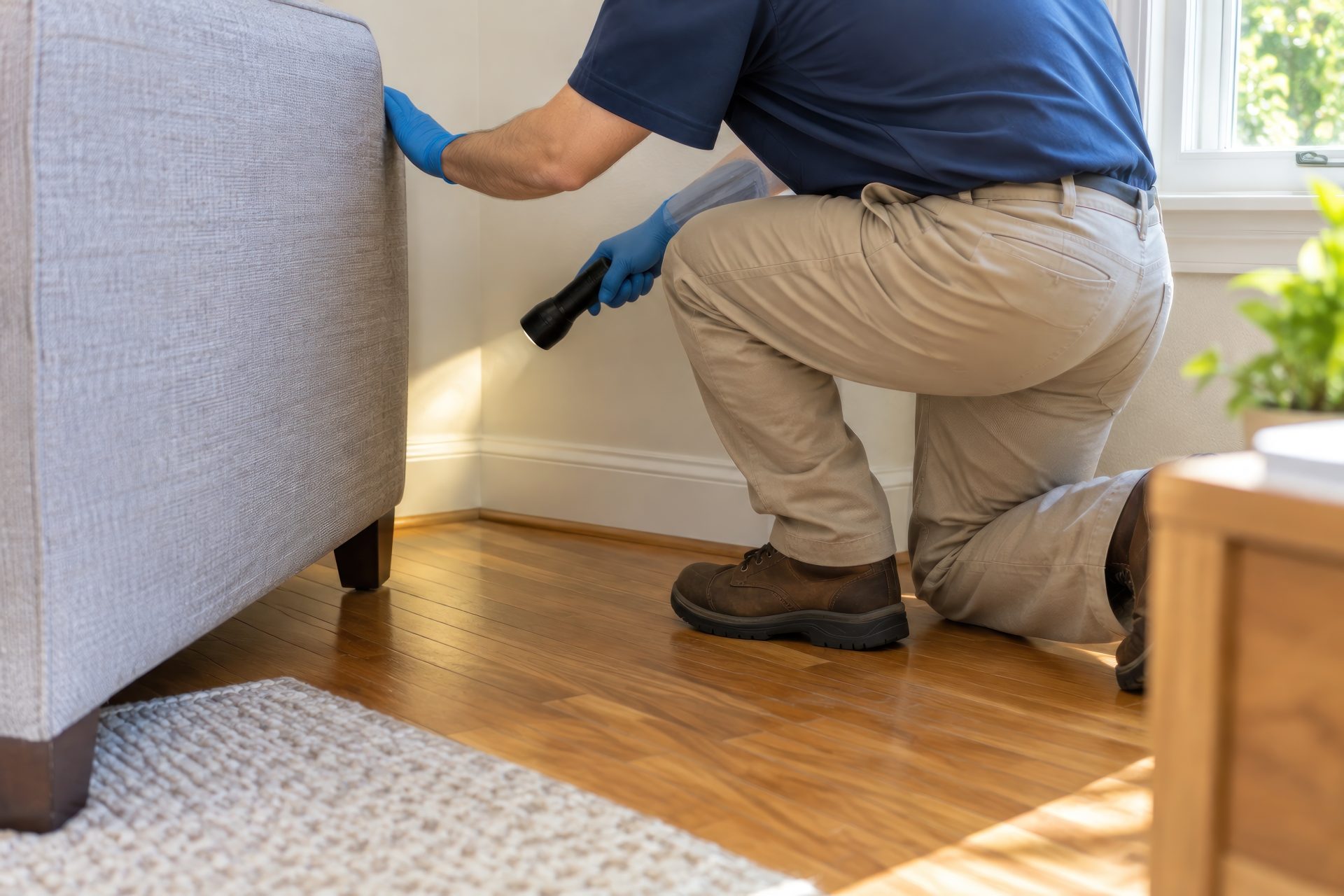
- Thin, invisible bands go along bed frames, headboards, baseboards, and other travel routes.
- Bed bugs pick up spores as they cross the bands.
- Activity declines gradually over 4 to 10 days as the spores spread.
- Each application gives up to 90 days of residual protection.
Because it keeps working between visits, it suits places where bed bugs may be carried back in. See how we use it on our Aprehend biopesticide treatment page.

How Traditional Chemical Sprays Work
Sprays apply insecticide to surfaces where bed bugs hide. The approach has two well-known gaps.
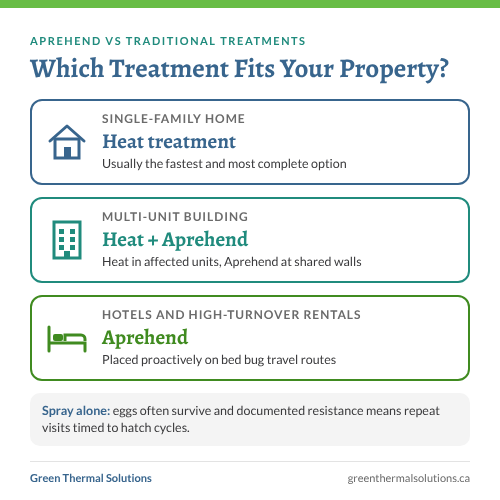
- Eggs often survive, so visits are timed to hatch cycles
- Research in the Journal of Economic Entomology documents resistance to common pesticides
- Each visit needs fresh prep and access
For landlords, those gaps add up to more notices, more prep, and more downtime. Our heat versus spraying comparison covers the research in more detail.
Where Heat Treatment Fits In
Heat is the fastest way to clear an active infestation. Adults, nymphs, and eggs all die between 117F and 122F in a single cycle.
Example: heat clears the unit today. Aprehend then guards shared walls and entry points for up to 90 days, which covers the gap heat leaves once the equipment is packed up.
The tradeoff is that heat leaves no residual protection once the cycle ends. Learn more about our bed bug heat treatment process.
Which Option Fits Your Property
The right choice depends on the building and the risk of bed bugs coming back. Here’s how the options line up.
- Single-family homes: heat is usually the fastest and most complete option
- Multi-unit buildings: heat in affected units, plus Aprehend at shared walls
- Hotels and high-turnover rentals: Aprehend placed proactively on travel routes
Health Canada notes bed bugs hide in extremely small locations, which is why treating travel routes matters. A barrier along those routes reaches places a quick visual check can miss.
Use Each Treatment for the Job It Does Best
Heat clears an active infestation in one cycle, including eggs. Aprehend keeps working afterward along the routes bed bugs travel. Sprays rely on repeat visits and face documented resistance. For most rental properties, the strongest plan pairs fast elimination with longer protection, matched to the building in front of you. A free inspection tells you exactly which mix your property needs.
Not sure which fits your property? Book a free inspection and get a written treatment recommendation.
Frequently Asked Questions
Is Aprehend safe around children and pets?
Yes, when it’s applied correctly. Aprehend is a natural biopesticide with no lingering odour. Its label does not allow application on mattresses or on flat surfaces with prolonged human contact, so it goes on travel routes like bed frames and baseboards instead.
How often does Aprehend need to be reapplied?
We recommend repeating Aprehend treatments quarterly. Each application provides up to 90 days of residual protection, so a quarterly schedule keeps the barrier active, especially in multi-unit buildings and properties with frequent tenant or guest turnover. Read more in our Aprehend biopesticide overview.
Can tenants clean the floors after Aprehend is applied?
Yes, but not on the treated bands. Water and cleaners deactivate the spores, so the bands should not be wiped or mopped if they’re meant to last. Technicians mark the treated routes on a service map so everyone knows where to avoid.