

You’ve confirmed a bed bug report, booked the inspection, and now you have to tell the tenant. You already know how it might go. They feel embarrassed, they get defensive, or they assume you’re blaming them. Meanwhile the tenant next door has heard something in the hallway, and questions are starting.
Talking to tenants about bed bugs is the part many property managers dread most, but it doesn’t have to turn into a standoff. This post gives you the words to use, what to put in writing, answers to the questions tenants always ask, and how to approach neighbouring units without starting rumours.
Lead With Facts, Not Blame
Bed bugs feed on blood, not crumbs. They turn up in clean homes, new builds, and good hotels, so starting from that fact lowers the temperature right away.
- Say what happened and what happens next
- Skip questions about how the bed bugs got there
- Keep the focus on the plan and the date
Example: “We’ve arranged a professional inspection for Thursday. Bed bugs can show up in any building, and we’re handling it the way we would anywhere. You’ll get a prep checklist today.”
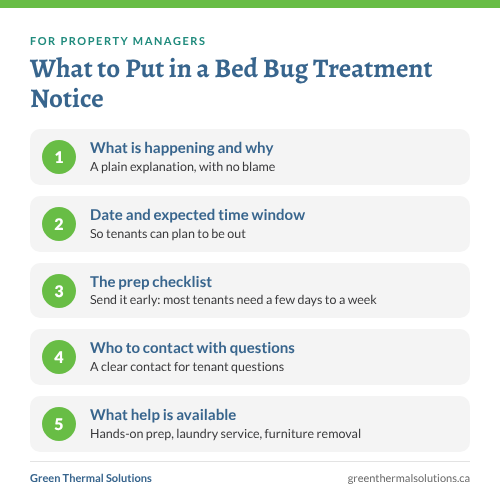
Put the Treatment Plan in Writing
A conversation sets the tone, but the written notice does the work. Settlement.org notes bed bug treatment is not considered an emergency, so tenants should get proper notice and time to prepare.
- What is happening and why
- The date and expected time window
- The prep checklist
- Who to contact with questions
- What help is available, such as hands-on prep and post-care support
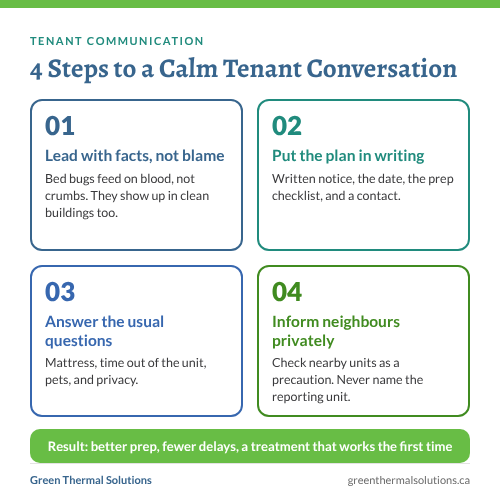
Answer the Questions Tenants Always Ask
Most pushback comes from worry, not stubbornness. Have these answers ready before the conversation starts.
- Do I have to throw out my mattress? Usually not. Heat treats it in place.
- How long will I be out? Until temperatures normalize, typically the same day.
- What about my pets? People and pets leave during treatment, and there’s no chemical residue afterward.
- Will my neighbours know? Our technicians are discreet and never disclose the nature of a visit.
For more detail on belongings, share whether bed bug heat treatments cause damage. A link tenants can read on their own time often settles more nerves than a long conversation.
What to Say to Neighbouring Tenants
Adjacent units need inspection, and those tenants deserve a clear reason. Keep the reporting unit private and frame the visit as routine.
- Don’t name the unit that reported
- Explain that nearby units are being checked as a precaution
- Give the same written notice and contact details
Our commercial bed bug treatment for property managers includes inspections of nearby units and common areas. Technicians work discreetly so the visit draws no attention.
Calm, Clear Communication Gets the Unit Ready
Tenants cooperate when they understand the plan and don’t feel blamed. Start from the facts, back the conversation with a clear written notice, answer the common worries before they turn into objections, and protect everyone’s privacy when you approach the units nearby. The result is better prep, fewer delays, and a treatment that works the first time. It also builds trust you can draw on the next time a tenant reports a problem.
When you’re ready to schedule, book an inspection with a tenant prep checklist included.
Frequently Asked Questions
What if a tenant refuses to prepare or allow access?
Document it and follow the formal route. Tenants are responsible for cooperating with inspection and preparation, and disputed cases go to the Landlord and Tenant Board. Keep copies of every notice, checklist, and response. Offering hands-on prep help or a bed bug laundry service often resolves refusals that are really about not being able to do the work.
What if the tenant blames a neighbouring unit?
They may be right. Bed bugs travel through shared walls, outlets, and plumbing chases, which is why adjacent units should be inspected anyway. Let the inspection findings answer the question rather than debating it, and keep the conversation focused on getting every affected unit treated.
How soon should I contact a tenant after a bed bug report?
The same day, if possible. A quick written acknowledgement with the inspection date shows you’re acting, and it reduces the chance a worried tenant tries a fogger or moves belongings around the building in the meantime. Follow up in person or by phone once the notice is sent.